


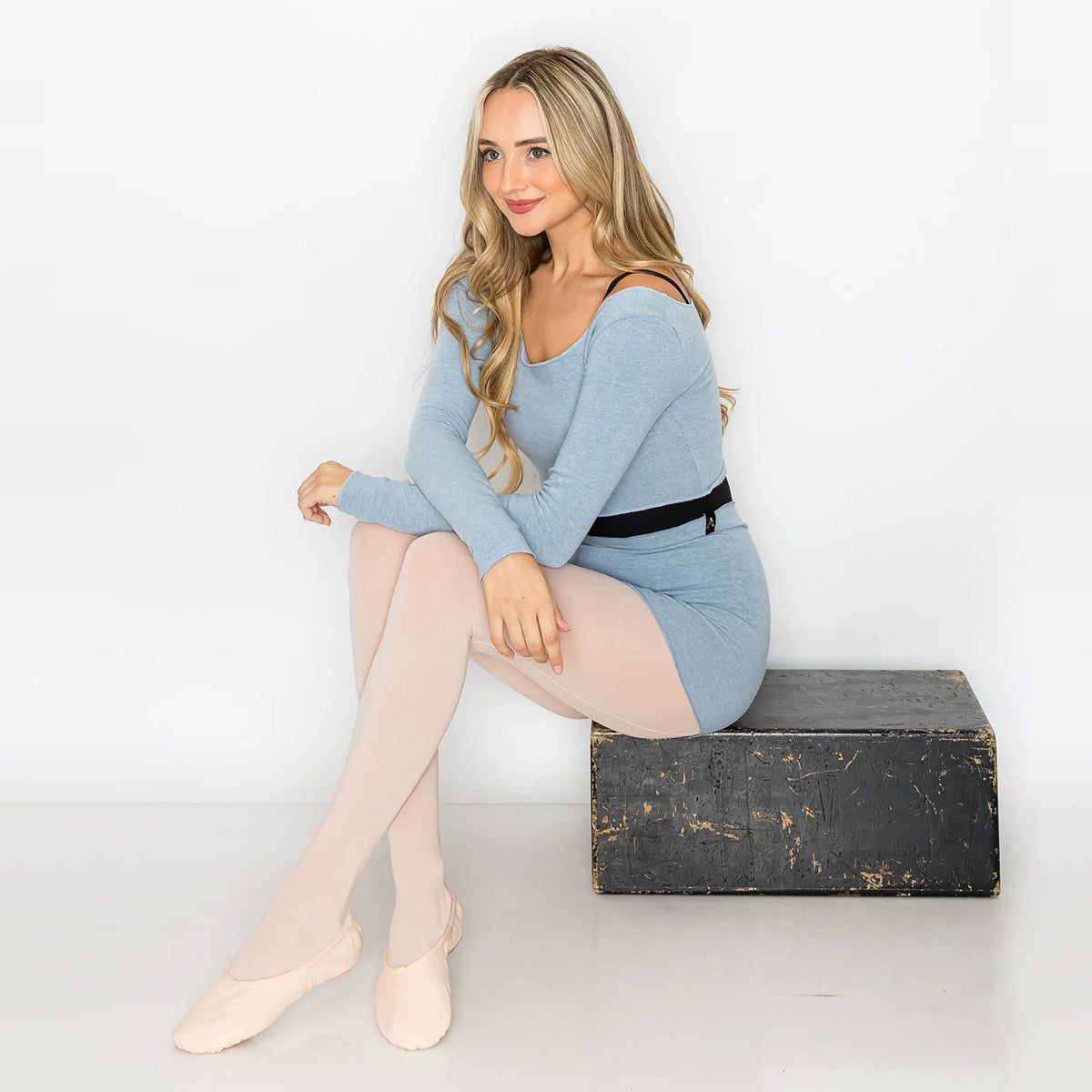
Selecting the appropriate ballet slipper is a foundational decision that directly impacts a dancer’s training, technique, and long-term development. Among the most common choices is the distinction between full sole and split sole ballet shoes. While both serve the same fundamental purpose, their construction and function differ significantly, making each better suited to specific stages of training.
Full Sole Ballet Slippers
Full sole ballet slippers are constructed with a single, continuous piece of sole material extending from heel to toe. This traditional design provides a stable and supportive foundation for developing dancers.
The full sole offers a higher level of support, promoting stability and proper alignment. Because the sole runs the entire length of the foot, it creates added resistance under the arch. This resistance plays an important role in strengthening the intrinsic muscles of the foot, helping dancers build the control necessary for more advanced technique.
For students still developing coordination, balance, and overall control, full sole slippers support safe and effective progression. They encourage proper muscle development in the feet and ankles while reinforcing correct placement from the earliest stages of training.
Best suited for:
• Beginner and younger dancers
• Dancers building foundational strength and technique
• Students requiring additional support and stability
Full sole ballet slippers are most commonly available in leather, offering durability and structure, though select styles are also produced in canvas.
Split Sole Ballet Slippers
Split sole ballet slippers feature two separate sole pads - one under the ball of the foot and one under the heel — leaving the arch area unsupported. This construction allows for significantly greater flexibility throughout the foot.
With less restriction beneath the arch, dancers are able to achieve increased articulation and a greater range of motion. The design also enhances the visual line of the foot by allowing the arch to fully extend, creating a more refined and aesthetically pleasing shape.
Because split sole slippers provide less structural support, they are best suited for dancers who have already developed sufficient strength and control. At this stage, the focus shifts from building strength to refining technique, particularly in areas such as articulation, flexibility, and precision of movement.
Best suited for:
Intermediate and advanced dancers
Technique refinement and performance
Dancers focusing on articulation and foot flexibility
Split sole ballet slippers are most popular in canvas for their lightweight, breathable feel, though leather options are also available.
Popular Split Sole Ballet Slippers:
Key Considerations When Choosing
Strength Development - Full sole slippers provide the resistance necessary to build strength in developing dancers. Split soles, by contrast, are intended for dancers who have already established that foundation.
Flexibility and Articulation - Split sole shoes offer greater pliability, allowing dancers to fully articulate through the foot and achieve a more pronounced arch.
Comfort and Fit - Split soles are often preferred for their lightweight, second-skin feel. Full soles, however, provide more structure and support, which can be beneficial during early training.
Progression in Training
Most dancers begin their training in full sole ballet slippers to establish proper technique, strength, and alignment. As strength and control improve, instructors often recommend transitioning to split sole shoes to support increased articulation and refinement.
The timing of this transition is important. Moving to a split sole too early may reduce the support needed for proper development, while remaining in a full sole for too long may limit flexibility and the ability to achieve a fully articulated foot.
Final Thoughts
Both full sole and split sole ballet slippers play an essential role in a dancer’s progression. Selecting the appropriate style should be based on the dancer’s current level, technical needs, and training goals.
Regardless of construction, ballet slippers should fit snugly — like a second skin — without restricting movement or causing discomfort. A professional fitting ensures proper alignment, support, and overall performance in the studio.
Choosing the correct ballet slipper is not simply a matter of preference; it is a strategic decision that supports safe development and technical excellence at every stage of training.